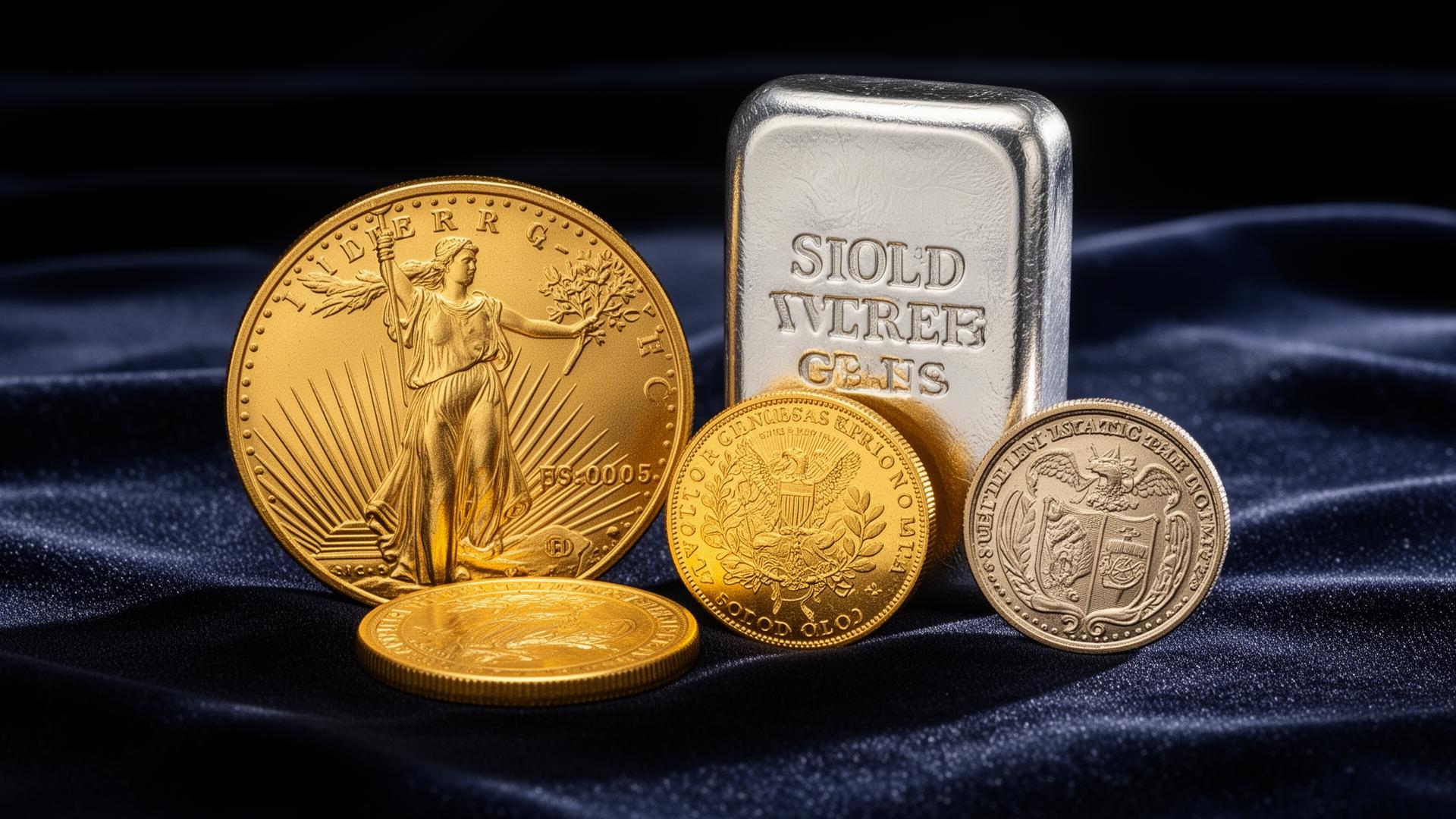
Why Product Type Matters
When most people think about buying gold or silver, they focus on the metal itself — its price, purity, and weight. But the form you buy it in matters just as much. Coins, bars, and rounds each carry different premiums, liquidity profiles, and resale characteristics. Choosing the wrong product can mean paying too much upfront or struggling to sell at a fair price later.
This guide explains the practical differences between product types so you can make informed buying decisions — whether you're starting with a few hundred dollars or building a six-figure position.
The rule of thumb:
The more recognizable and standardized a product is, the easier it is to sell — and the tighter the spread between what you pay and what you receive when selling. Liquidity is a feature you pay for, and it's worth the premium.
Coins — Government-Minted Bullion
Government-minted bullion coins are produced by sovereign mints and carry a face value (though their metal content is worth far more). They are the most recognizable and widely traded form of physical precious metals.
Popular Gold Coins
- American Gold Eagle — 22-karat (91.67% gold), backed by the U.S. government, most traded gold coin in the U.S.
- American Gold Buffalo — 24-karat (99.99% gold), the purest U.S. gold coin
- Canadian Gold Maple Leaf — 24-karat (99.99% gold), known for advanced security features
- South African Krugerrand — 22-karat, the world's first modern bullion coin (1967)
- Austrian Philharmonic — 24-karat, Europe's most popular gold coin
Popular Silver Coins
- American Silver Eagle — 1 oz, 99.9% silver, the world's best-selling silver coin
- Canadian Silver Maple Leaf — 1 oz, 99.99% silver
- Austrian Silver Philharmonic — 1 oz, 99.9% silver
- British Silver Britannia — 1 oz, 99.9% silver
Key advantages of coins:
- Instantly recognizable — easy to authenticate and sell
- Government-backed weight and purity guarantees
- Available in fractional sizes (1/10 oz, 1/4 oz, 1/2 oz)
- Legal tender status (relevant for certain tax and IRA rules)
- Highest liquidity of all physical product types
The trade-off: Coins carry higher premiums over spot price than bars or rounds — typically 3–8% for gold coins and 10–25% for silver coins. You're paying for recognition, guaranteed purity, and liquidity.
Bars — Maximum Metal per Dollar
Bullion bars (also called ingots) are produced by private refineries and come in a wide range of sizes — from 1 gram to 400 troy ounces for gold, and 1 oz to 1,000 oz for silver. Bars offer the lowest premiums over spot price, making them the most cost-efficient way to accumulate metal.
Common Sizes
| Metal | Popular Sizes | Best For |
|---|---|---|
| Gold | 1 oz, 10 oz, 1 kilo | Lower premiums, larger allocations |
| Silver | 10 oz, 100 oz, 1,000 oz | Bulk accumulation, cost efficiency |
| Platinum | 1 oz, 10 oz | Core platinum positions |
| Palladium | 1 oz, 10 oz | Speculative allocations |
Trusted Refiners
Not all bars are equal. Bars from LBMA-accredited (London Bullion Market Association) or COMEX-approved refiners carry the most credibility and are easiest to resell. Well-known refiners include:
- PAMP Suisse — Swiss refiner, known for the "Lady Fortuna" design
- Valcambi — Swiss, produces combi-bars (breakable smaller units)
- Royal Canadian Mint — Government refiner, high security features
- Perth Mint — Australian government mint
- Johnson Matthey — No longer producing, but bars remain highly sought after
Key advantages of bars:
- Lowest premiums over spot — especially at larger sizes
- Efficient storage — bars stack neatly in safes and vaults
- Available from 1 gram to institutional sizes
- Assay cards (certificates) verify weight and purity
The trade-off: Bars from lesser-known refiners can be harder to sell. Larger bars (100 oz gold) are less divisible — you can't sell half a bar. And bars generally lack the instant recognition that government coins enjoy.
Rounds — Private-Mint Alternatives
Rounds look like coins but are produced by private mints rather than government facilities. They have no face value and no legal tender status. Rounds are essentially coin-shaped bars — valued purely for their metal content.
Key characteristics:
- Lower premiums than government coins (typically 2–5% over spot for gold)
- Available in 1 oz and fractional sizes
- Wide variety of designs from private mints
- No legal tender status — purely a bullion product
Silver rounds are particularly popular because the premium savings compared to American Silver Eagles can be significant — sometimes $3–5 per ounce less. For investors accumulating large silver positions, this adds up quickly.
The trade-off: Rounds are less liquid than government coins. Some dealers buy them back at a discount, and they're not as instantly recognizable to private buyers. For maximum resale flexibility, stick to well-known private mints like Sunshine Minting, SilverTowne, or Asahi.
Bullion vs Numismatic & Collectible
This is one of the most important distinctions in precious metals investing — and one of the biggest sources of beginner mistakes. Understanding the difference can save you thousands of dollars.
Bullion
Bullion products are valued primarily for their metal content. Their price tracks closely with spot price plus a modest premium. When spot gold is $2,600/oz, a 1 oz Gold Eagle might sell for $2,700–$2,750. The premium is predictable and relatively small.
Numismatic / Collectible
Numismatic coins are valued for their rarity, condition, historical significance, and collector demand — not just their metal content. A $20 Saint-Gaudens gold coin from 1927 contains about $2,600 in gold but might sell for $2,800–$50,000+ depending on grade, mint mark, and scarcity.
| Factor | Bullion | Numismatic |
|---|---|---|
| Priced based on | Spot price + small premium | Rarity, condition, collector demand |
| Premium over spot | 3–15% | 50–500%+ |
| Expertise needed | Minimal | Significant (grading, authenticity) |
| Liquidity | High — easy to sell anywhere | Variable — depends on market |
| Price transparency | High — tied to spot | Low — subjective valuations |
| IRA eligible | Yes (approved products) | Generally no |
| Best for | Investors | Collectors, hobbyists |
⚠️ Watch out for this:
Some dealers aggressively push numismatic coins to new investors because the markups are much higher — sometimes 50–100% over melt value. If you're buying precious metals as an investment rather than a collecting hobby, stick to bullion. You'll get more metal for your money, better liquidity, and more transparent pricing.
Liquidity Rankings by Product Type
Liquidity means how quickly and easily you can convert your metals back to cash at a fair price. Not all products are equally liquid.
American Gold & Silver Eagles
Every dealer in the U.S. will buy these. Instantly recognizable, no assay needed. Tightest buy/sell spreads.
Canadian Maple Leafs, Krugerrands, Gold Buffalos
Widely recognized internationally. Slightly wider spreads than Eagles but still excellent liquidity.
PAMP Suisse / Valcambi bars (1 oz – 10 oz)
Top-tier refiner brands. Most dealers buy these at competitive prices. Assay cards help.
Generic bars and rounds (1 oz)
Dealers will buy them, but often at a discount. May require assay testing for larger bars from unknown refiners.
Large bars (100 oz gold, 1,000 oz silver)
High dollar value limits buyer pool. May need to sell to institutional dealers or refiners. Not divisible.
Numismatic / collectible coins
Liquidity depends on collector demand, not metal price. May take weeks to find the right buyer at a fair price.
The liquidity principle:
Buy products you can sell quickly. In a crisis or sudden need for cash, you want metals that any dealer will immediately quote a buy price on — no authentication delays, no grading disputes, no searching for specialty buyers.
Where and How to Sell
Knowing your exit options before you buy is essential. Here are the main channels for selling physical precious metals:
1. Sell Back to Your Dealer
Most reputable dealers have buyback programs. You ship your metals back (insured) and receive a quote based on the current spot price minus a small discount. This is the most common and convenient option. Many of the top-ranked dealers offer competitive buyback spreads.
2. Local Coin Shops
Walk in, get a quote, walk out with cash. Prices may not be as competitive as online dealers, but the transaction is immediate and there's no shipping risk. Bring standard bullion products (Eagles, Maples) for the best experience.
3. Peer-to-Peer Platforms
Online forums and marketplaces (like r/PMsForSale on Reddit) allow direct sales to other collectors and investors. You can sometimes get better prices, but there's more risk involved — potential scams, shipping issues, and payment disputes.
4. Pawn Shops (Not Recommended)
Pawn shops typically offer well below spot price. They're a last resort, not a strategy. If you need to sell quickly, an online dealer's buyback program will almost always beat a pawn shop offer.
5. IRA Liquidation
If your metals are held in a precious metals IRA, your custodian handles the sale through an approved dealer. You don't physically handle the metal — the proceeds go back into your retirement account. See our retirement accounts guide for details.
IRA Eligibility by Product Type
Not every precious metal product qualifies for inclusion in a self-directed IRA. The IRS has specific fineness (purity) requirements:
| Metal | Minimum Fineness | Eligible Examples |
|---|---|---|
| Gold | 99.5% (exception: American Eagle at 91.67%) | Gold Eagle, Gold Buffalo, Maple Leaf, bars from approved refiners |
| Silver | 99.9% | Silver Eagle, Silver Maple Leaf, bars from approved refiners |
| Platinum | 99.95% | Platinum Eagle, Platinum Maple Leaf, approved bars |
| Palladium | 99.95% | Palladium Eagle, Palladium Maple Leaf, approved bars |
⚠️ Not IRA eligible:
Numismatic coins, collectible coins, Krugerrands (they don't meet the 99.5% gold fineness requirement), and products from non-approved refiners are generally not eligible for inclusion in a precious metals IRA. Always verify eligibility with your custodian before purchasing.
What Should You Buy First?
If you're just getting started, here's a practical framework based on budget and goals:
💰 Under $500
Start with 1 oz silver coins (American Silver Eagles or Canadian Maple Leafs). They're affordable, highly liquid, and teach you the buying/selling process with lower stakes.
💰 $500 – $3,000
Consider a mix: a 1 oz gold coin (Eagle or Buffalo) as your core, supplemented with silver coins or 10 oz silver bars for growth exposure. Government coins give you the best liquidity.
💰 $3,000 – $25,000
Build a diversified physical position: gold coins and bars as the core (60–70%), silver bars and coins (25–35%), and optionally a small platinum allocation. At this level, 10 oz gold bars become cost-efficient.
💰 $25,000+
Consider a precious metals IRA for tax advantages. Use kilo gold bars and 100 oz silver bars for cost efficiency. Diversify across product types and storage locations. See our Gold IRA guide for setup details.
Common Questions
Are coins or bars a better investment?
Neither is inherently "better" — they serve different purposes. Government coins offer the best liquidity and recognition. Bars offer the lowest premiums. Most investors benefit from owning both: coins for liquidity and divisibility, bars for cost-efficient accumulation.
Should I ever buy numismatic coins?
Only if you're a knowledgeable collector buying for hobby value, not as a metals investment. Numismatic coins are priced based on subjective factors (rarity, condition, demand) and require expertise to evaluate fairly. For investment purposes, bullion is almost always the better choice.
Why are silver premiums so much higher than gold premiums?
The costs to mine, refine, mint, ship, and store an ounce of silver are similar to those for gold — but silver is worth ~$30/oz compared to gold at ~$2,600/oz. Those fixed costs represent a much larger percentage of the silver price, resulting in higher proportional premiums.
Can I sell precious metals online?
Yes. Most online dealers have buyback programs where you ship your metals (insured) and receive payment at the current market rate minus a small spread. This is the most convenient option for most investors. Some dealers also offer lock-in pricing, so you know exactly what you'll receive before shipping.
What's the difference between "spot price" and what I actually pay?
Spot price is the wholesale market price for raw metal. You'll always pay a premium above spot when buying physical products — this covers minting, dealer margin, and distribution. The premium varies by product type, quantity, and market conditions. When selling, you'll typically receive slightly below spot (the "bid" price).
Do I need to report precious metals purchases or sales?
Generally, buying precious metals doesn't trigger reporting requirements. However, certain sales above specific thresholds may require your dealer to file a 1099-B with the IRS. Capital gains from selling are taxable. See our guide on tax implications for details.