Crypto Scam Protection: Secure Your Digital Assets

Key Takeaways
- Cold Storage is King: Keeping your cryptocurrency on an offline hardware wallet is the most effective way to protect against online hacks and exchange collapses.
- Beware of "Pig Butchering": Long-term social engineering scams, often starting with a "wrong number" text, are currently the most devastating financial scams targeting older investors.
- Never Share Your Seed Phrase: Your 12-to-24-word recovery phrase is the master key to your funds. Legitimate support staff will never ask for it.
- Test Transactions Save Assets: Always send a small test amount before transferring large sums to verify the complicated alphanumeric wallet address is correct.
- Physical Assets Offer an Alternative: For investors exhausted by digital security anxieties, tangible assets like physical gold and silver eliminate cyber hacking risks entirely.
Meta Description
Learn how to spot cryptocurrency fraud and implement essential crypto scam protection strategies to safeguard your digital and alternative wealth.
What is Crypto Scam Protection?
Crypto scam protection is the practice of securing digital assets against theft, fraud, and unauthorized access through a combination of operational security (OpSec), hardware tools, and psychological awareness. Because cryptocurrency transactions are immutable—meaning they cannot be reversed once processed—protecting your private keys and identifying social engineering tactics before sending funds is the only line of defense against permanent financial loss.
Unlike traditional banking, where the FDIC insures deposits and fraud departments can reverse unauthorized credit card charges, the blockchain operates on a trustless system. You are your own bank. This financial sovereignty comes with the heavy burden of total responsibility for your asset security.
The 5 Most Common Cryptocurrency Scams
Understanding how criminals operate is the first step in crypto scam protection. The FBI’s Internet Crime Complaint Center (IC3) routinely reports billions of dollars lost annually to cryptocurrency-related fraud, with older demographics heavily targeted.
1. "Pig Butchering" (Romance and Investment Scams)
How does pig butchering work? A scammer contacts the victim seemingly by accident (e.g., a "wrong number" WhatsApp text) and slowly builds a friendship or romantic relationship over weeks or months. Once trust is established, they introduce the victim to a highly profitable cryptocurrency investment platform.
The platform is completely fake. The scammer allows the victim to make small initial withdrawals to build confidence ("fattening the pig"), but when the victim attempts to withdraw their life savings, the platform demands exorbitant "tax" or "withdrawal" fees before ultimately disappearing.
2. Fake Exchanges and Malicious Apps
Scammers frequently build cloned websites that look exactly like popular exchanges (such as Coinbase or Kraken) or publish fake wallet applications on official app stores. When a user logs in or inputs their seed phrase into these malicious interfaces, the scammers instantly drain the connected wallets.
3. Phishing and Airdrop Scams
Phishing in the crypto space often happens via email, Discord, or X (formerly Twitter). Users receive an urgent message claiming their account will be frozen or that they are eligible for a free token "airdrop." Clicking the link prompts the user to connect their digital wallet and sign a smart contract. That contract contains hidden permissions allowing the hacker to siphon all tokens from the wallet.
4. Ponzi Schemes and Rug Pulls
In a "rug pull," developers launch a new cryptocurrency token, hype it aggressively on social media to attract investor capital, and then abruptly abandon the project, taking all the funds with them. The token's value immediately drops to zero.
5. Imposter Tech Support
If you post a question about a stuck transaction on a public forum, dozens of "customer support agents" will immediately direct message you. They will offer to help you resolve the issue by asking you to "validate your wallet" on a specific website, which requires entering your recovery phrase.
Essential Crypto Scam Protection Strategies
To effectively shield your digital portfolio, you must implement strict security protocols.
Move Assets to Cold Storage
What is cold storage? Cold storage refers to keeping your cryptocurrency private keys offline on a physical hardware device (like a Trezor or Ledger). Because the device is not connected to the internet, it is virtually impossible for remote hackers to steal your funds. You only connect the device to a computer when you actively need to authorize a transaction.
Leaving your funds on a centralized exchange exposes you to counterparty risk. If the exchange goes bankrupt or is hacked (as seen with FTX or Mt. Gox), you may lose everything. Protecting against liquidity crises requires holding your own assets directly.
Secure Your Seed Phrase Offline
When you set up a non-custodial wallet, you are given a 12- or 24-word seed phrase. This is the master password to your funds.
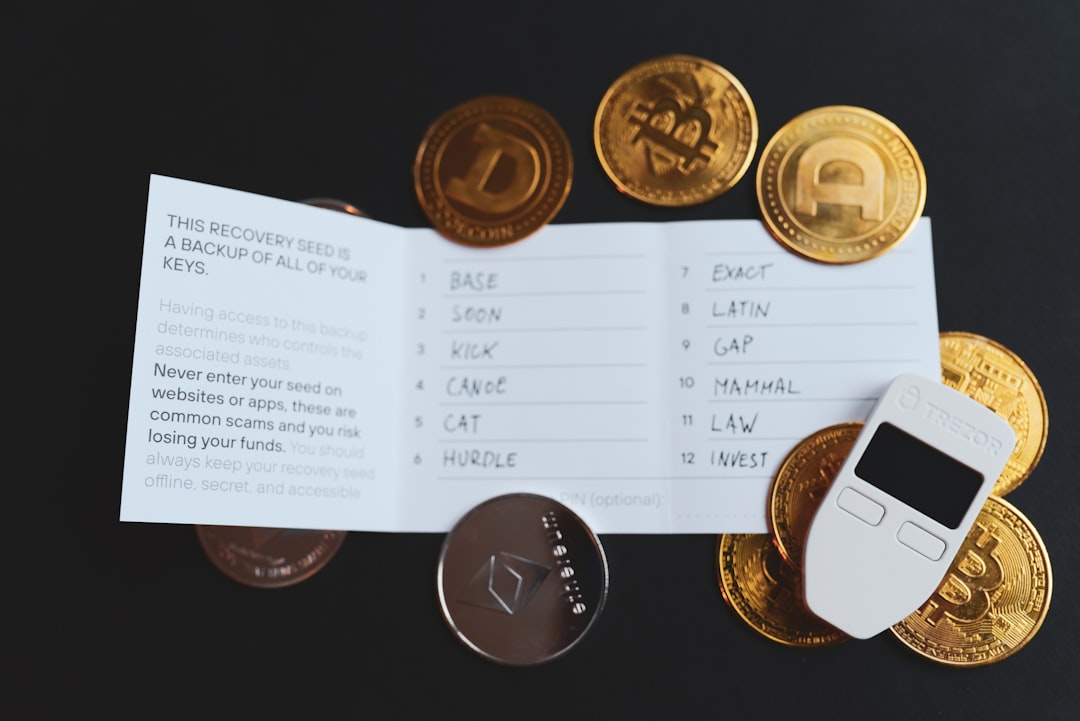
- Do not take a photo of it.
- Do not save it in Google Drive, Apple Notes, or an email draft.
- Do write it down on paper or engrave it into a fireproof metal plate and store it in a secure physical location, like a home safe or bank vault.
Use Hardware-Based Two-Factor Authentication (2FA)
SMS text message 2FA is highly vulnerable to SIM-swap attacks, where a hacker bribes or tricks a telecom employee into porting your phone number to the hacker’s device. Once they have your number, they can bypass SMS security codes. Instead, use an authenticator app (like Google Authenticator) or, better yet, a physical hardware security key (like a YubiKey) for all exchange accounts.
Red Flags: How to Spot a Crypto Scam Before It's Too Late
Use this checklist to evaluate any cryptocurrency opportunity or interaction:
| Red Flag | What It Means | Action to Take |
|---|---|---|
| Guaranteed Returns | Crypto is highly volatile. No legitimate platform can promise steady, risk-free daily or monthly returns. | Walk away immediately; it is likely a Ponzi scheme. |
| Pressure to Act Fast | Scammers create false urgency (e.g., "This airdrop ends in 10 minutes!") to bypass your critical thinking. | Stop, disconnect your wallet, and verify the claim on official channels. |
| Asking for Seed Phrases | No legitimate tech support, government agency, or exchange will ever need your 12-to-24-word recovery phrase. | Block the sender and report the account. |
| Unsolicited DMs | Random messages on Telegram, Discord, or WhatsApp offering investment advice or technical help. | Ignore and delete. Legitimate companies do not initiate support via DM. |
| Complex Withdrawal Rules | If an exchange asks you to deposit more money to cover "taxes" before you can withdraw your funds. | Stop sending money. Contact authorities; you are in a fake exchange. |
Digital Assets vs. Tangible Assets: The Security Difference
While mastering crypto scam protection is necessary for digital investors, the sheer complexity of seed phrases, smart contracts, and phishing attacks leads many older investors to reconsider asset allocation.
Unlike cryptocurrencies, which exist entirely as code on a decentralized network, physical precious metals are tangible, offline assets. This fundamental difference drastically alters the security landscape. You cannot "accidentally click a malicious link" and lose a physical gold bar stored in a depository.
For investors prioritizing absolute security and wealth preservation, comparing physical metals vs Wall Street and digital equivalents is crucial. While physical metals require physical security (safes, insured depositories), they carry zero cyber-risk. If an investor wants the inflation-hedging properties often attributed to Bitcoin without the anxiety of digital security, learning how to buy gold outright or utilizing a precious metals IRA provides a purely analog alternative.
For a comprehensive look at balancing modern alternative assets with traditional wealth preservation, consider reading a beginner's guide to precious metals.
FAQ
1. What is the most common crypto scam right now?
Currently, "pig butchering" is the most financially devastating crypto scam. Criminals spend months building a fake romantic or platonic relationship with victims online before convincing them to invest in a fraudulent cryptocurrency platform that eventually steals all deposited funds.
2. Can stolen cryptocurrency be recovered?
In the vast majority of cases, stolen cryptocurrency cannot be recovered. Because blockchain transactions are decentralized and immutable, there is no central bank or authority that can reverse a transaction once it is confirmed. Law enforcement occasionally recovers funds from massive exchange hacks, but individual scam losses are rarely recouped.
3. How do I know if a crypto exchange is legitimate?
Legitimate exchanges are highly regulated, require KYC (Know Your Customer) identity verification, and have a long track record of operation. Always navigate directly to well-known exchanges (like Coinbase or Kraken) by typing the URL yourself rather than clicking links. Beware of obscure exchanges recommended by online "friends."
4. Are hardware wallets completely immune to scams?
No. While hardware wallets protect your private keys from being stolen remotely by hackers, they cannot protect you from your own actions. If a scammer tricks you into approving a malicious smart contract, or convinces you to type your seed phrase into a fake website, your funds can still be stolen from a hardware wallet.
5. Why do scammers ask for my seed phrase?
Your seed phrase is the mathematical master key that controls your cryptocurrency on the blockchain. Anyone who has those 12 or 24 words can instantly recreate your wallet on their own device and send your funds to themselves. It is the equivalent of handing someone the keys and title to your car.
6. How does the safety of crypto compare to physical gold?
Cryptocurrency is a digital bearer asset subject to hacking, phishing, and software bugs, requiring rigorous digital security protocols. Physical gold is a tangible bearer asset; it carries zero cyber-risk or counterparty risk but requires physical security, such as a home safe or a professional insured depository, to protect against physical theft.
Bottom Line
Effective crypto scam protection requires a zero-trust mindset. Because the blockchain removes the safety nets provided by traditional banking, the responsibility for securing digital wealth falls entirely on the investor. By utilizing cold storage, keeping seed phrases offline, and learning to identify the social engineering tactics of modern scammers, you can drastically reduce your risk. However, for those who find the constant vigilance of digital security exhausting, diversifying into un-hackable, tangible assets like physical precious metals remains a time-tested strategy for secure wealth preservation.
Found this article helpful?
Take Our 1-Minute Gold IRA Match Quiz
Get a personalized recommendation based on your goals and investment style.
Explore Related Topics
For investors who don't have time to chase headlines.
Subscribe to The Precious Metals Report
Everything That Matters. Nothing That Doesn't.
No hype. No noise.
Just industry news — distilled into a short, scannable email.
✔ Price moves ✔ Market drivers ✔ Actionable insights

Vincent Edwards
Our editorial team covers education for Precious Metals Report, focused on clear, unbiased reporting and investor education.
Read more from this author