The Royal Mints of the World: Comparing Gold Coins from the U.S., Canada, U.K., and Australia
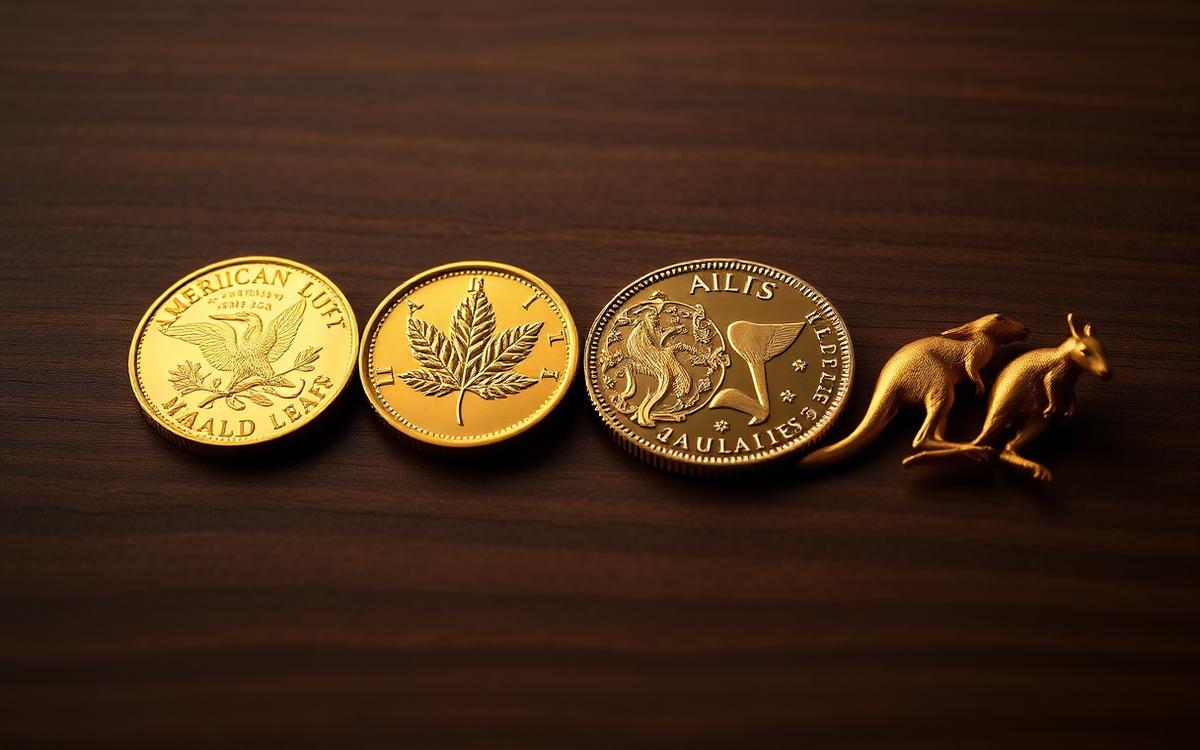
As we navigate the financial landscape of 2026, the bedrock principles of wealth preservation have seldom been more relevant. With gold's spot price holding strong near the $5,250 per ounce mark, investors are increasingly discerning about not just if they should own physical gold, but how. The choice of which sovereign gold coin to hold is no longer a trivial matter of preference; it is a strategic decision impacting liquidity, security, and long-term value. For the intermediate investor, understanding the nuanced differences between the world's leading bullion coins is paramount. This analysis moves beyond mere aesthetics to compare the flagship offerings from the United States, Canada, the United Kingdom, and Australia, providing a clear framework for aligning your physical gold holdings with your specific financial objectives.
Key Takeaways
- The world's premier government mints offer distinct gold bullion coins, each with unique characteristics related to purity, durability, security, and design legacy.
- Purity is a key differentiator: American Gold Eagles and British Sovereigns use a 22-karat (91.67%) gold alloy for durability, while American Buffalos, Canadian Maple Leafs, British Britannias, and Australian Kangaroos are struck in 24-karat (.9999 fine) gold.
- The Royal Canadian Mint and The Royal Mint UK lead in anti-counterfeiting technology, incorporating features like micro-engraving, radial lines, and advanced latent imagery, a crucial consideration with gold prices at current levels.
- The American Gold Eagle remains the benchmark for liquidity and recognition, particularly within the United States, often commanding the most competitive buyback prices from dealers.
- For investors seeking a potential numismatic upside, the Australian Kangaroo's annually changing design offers an element of collectibility not found in other annually-issued bullion coins.
- All modern 1 oz coins discussed (Eagle, Buffalo, Maple Leaf, Britannia, Kangaroo) are eligible for inclusion in a self-directed Precious Metals IRA, but the historic British Sovereign is not.
The Foundation of Sovereign Gold: Understanding Bullion Coins
Before diving into a comparative analysis, it is essential to establish what we mean by "sovereign gold bullion coin." Unlike generic gold rounds or bars produced by private mints, a sovereign coin is manufactured by a government-operated (or government-owned) mint and is designated as official legal tender in its country of origin. While the face value—for instance, $50 on a 1 oz American Gold Eagle—is purely symbolic and dwarfed by the coin's intrinsic metal value, this legal tender status carries significant weight. It serves as an official guarantee by the issuing government of the coin's weight and purity.
This government backing is the cornerstone of trust in the global precious metals market. When you purchase a Canadian Maple Leaf, you are not just buying one troy ounce of gold; you are buying one troy ounce of gold certified by the Government of Canada. This assurance facilitates global trade, ensures high liquidity, and provides a level of confidence that private mint products, despite their own merits, cannot replicate. These coins form the very bedrock of physical gold investment, recognized and traded daily from New York to London and Sydney. Our focus here is on the most popular and liquid 1-ounce versions of these coins, which represent the standard for most bullion investors.
The United States Mint: Durability vs. Purity
The United States Mint produces the world's most recognized and heavily traded gold bullion coin, the American Gold Eagle, alongside a 24-karat counterpart, the American Gold Buffalo. This dual offering allows investors to choose between the U.S. tradition of durable coinage and the global standard of pure gold.
The American Gold Eagle (22-Karat)
First minted in 1986, the American Gold Eagle was designed for the rigors of investment and trade. Its 22-karat composition, mandated by the Gold Bullion Coin Act of 1985, consists of 91.67% gold, 3% silver, and 5.33% copper. It is crucial to understand that a 1 oz Gold Eagle contains one full troy ounce of pure gold. The additional alloy metals increase its gross weight to approximately 1.0909 troy ounces, making the coin harder and more resistant to scratches and dents than a pure gold coin. This durability was a key reason for its alloyed design, harkening back to an era when gold coins might actually circulate.
The Eagle's primary advantage is its unparalleled liquidity within the U.S. market. It is the default choice for many American investors, and dealers nationwide maintain deep and active markets for it, resulting in consistently tight bid-ask spreads. Its obverse features a rendition of Augustus Saint-Gaudens' iconic Striding Liberty design from the 1907-1933 double eagle, while the reverse was updated in 2021 to feature a striking portrait of an eagle's head. The coin is produced in 1 oz, 1/2 oz, 1/4 oz, and 1/10 oz sizes and is fully eligible for inclusion in a Precious Metals IRA.
The American Gold Buffalo (24-Karat)
Introduced in 2006, the American Gold Buffalo was the U.S. Mint's response to the growing global demand for 24-karat (.9999 fine) bullion coins, pioneered by the Canadian Maple Leaf. For investors who prefer the standard of pure gold, the Buffalo offers a distinctly American option. Struck from one troy ounce of .9999 fine gold, it is softer and more susceptible to damage than the Eagle, making careful handling more important.
The Buffalo's design is equally celebrated, reviving James Earle Fraser's beloved "Indian Head" or "Buffalo Nickel" design from 1913. The classic imagery of a Native American profile on the obverse and an American bison on the reverse resonates deeply with collectors and investors alike. While initially only offered in a 1 oz size, recent years have seen occasional releases of fractional sizes in proof versions. The 1 oz bullion Buffalo is highly liquid, especially in North America, and is also eligible for a Precious Metals IRA. The choice between an Eagle and a Buffalo often comes down to a simple investor preference: the Eagle’s time-tested durability or the Buffalo’s four-nines purity.
The Royal Canadian Mint: Pioneering Purity and Security
The Royal Canadian Mint (RCM) is globally renowned for its innovation, particularly in refining and security. Its flagship product, the Gold Maple Leaf, has been a dominant force in the bullion market since its introduction, setting standards that other world mints have followed.
The Gold Maple Leaf (.9999 Fine)
When the Gold Maple Leaf debuted in 1979, the global market was dominated by the 22-karat South African Krugerrand. The RCM made a strategic decision to mint its coin in .999 fine gold, which was a significant step up in purity at the time. By 1982, they refined this further, establishing the new global benchmark of .9999 fine ("four nines") gold. This commitment to purity became the coin's defining characteristic and a major selling point for investors seeking the international standard for pure gold bullion.
The coin's design has remained consistent, featuring the iconic Canadian maple leaf on the reverse and a portrait of the reigning monarch (currently King Charles III) on the obverse. This consistency, combined with its purity and government guarantee, has made the Maple Leaf one of the top two most liquid and recognized gold bullion coins in the world, alongside the American Gold Eagle. It is available in a wide range of sizes, from 1 gram to 1 oz, making it accessible for nearly every budget.
Unmatched Security Features
In a world where a single ounce of gold costs over $5,000, the threat of sophisticated counterfeiting is a serious concern. The RCM has addressed this head-on by integrating a suite of state-of-the-art security features into the Gold Maple Leaf. Since 2013, the coins have featured precision-machined radial lines that create a unique, light-diffracting pattern that is extremely difficult to replicate. In 2015, the mint added a micro-engraved maple leaf privy mark, visible under magnification, containing the last two digits of the coin's year of issue.
The most advanced feature is Bullion DNA (Digital Non-destructive Activation). Every die used to strike the reverse of the coin is scanned, and its unique microscopic pattern is recorded in a secure database. Authorized dealers can use a special device to scan a coin, and the RCM's system can verify in seconds whether that coin's "DNA" matches a coin struck at the mint. This provides a level of verification that is unparalleled in the bullion industry, offering investors significant peace of mind.
The Royal Mint UK: A Legacy of Empire and Modern Security
The Royal Mint of the United Kingdom boasts a history stretching back over 1,100 years. It offers two distinct gold coins for the modern investor: the historic Sovereign, a symbol of the British Empire's financial might, and the modern Britannia, a 24-karat coin packed with cutting-edge security features.
The Sovereign: A Historical Icon (22-Karat)
The modern Gold Sovereign was first struck in 1817 and became one of the most trusted and recognized gold coins in the world during the 19th and early 20th centuries. Minted in the same 22-karat Crown Gold standard as the American Eagle, it is a durable and historically significant coin. Its most famous design features Benedetto Pistrucci's masterful engraving of St. George slaying the dragon on the reverse.
However, for the bullion investor, the Sovereign occupies a unique niche. It is a fractional coin, containing 0.2354 troy ounces of pure gold. While this smaller size makes it an affordable entry point, its primary appeal often lies in its semi-numismatic status and history. Furthermore, for UK residents, Sovereigns (and Britannias) are exempt from Capital Gains Tax (CGT), a significant financial advantage. For international investors, however, it is less liquid than 1 oz coins and is not eligible for a U.S.-based Precious Metals IRA due to its purity and non-standard size.
The Britannia: A Modern Contender (24-Karat)
The Gold Britannia was introduced in 1987 as a 22-karat coin to compete with other world bullion. However, in 2013, The Royal Mint made a pivotal change, upgrading the Britannia to .9999 fine 24-karat gold, placing it in direct competition with the Maple Leaf and Buffalo. This modernization effort culminated in 2021 with the introduction of four advanced security features that make it one of the most visually secure coins in the world.
These features include a latent image that changes from a padlock to a trident when the coin is tilted, surface animation on the waves in the background that appear to move, micro-text around the central figure, and tincture lines on the Union Flag shield. These additions, combined with its 24-karat purity and IRA eligibility, have dramatically increased the Britannia's popularity among global investors. It represents a powerful combination of ancient tradition and modern technology.
The Perth Mint of Australia: Innovation and Collectibility
Owned by the Government of Western Australia, the Perth Mint has earned a stellar reputation for producing high-quality bullion with an artistic flair. Its flagship gold coin program, the Australian Kangaroo, is unique among its peers for its annually changing design, which adds a layer of collectibility to its investment value.
First launched in 1986 as the "Australian Nugget," the coin initially featured famous gold nuggets found in Australia. In 1990, the theme was changed to the nation's most famous marsupial, the kangaroo, and the tradition of a new reverse design each year began. This annual change distinguishes the Kangaroo from the Eagle, Maple Leaf, and Britannia, whose designs remain largely static. This feature appeals to investors who appreciate variety and the potential for certain years to become more sought-after by collectors, potentially adding a modest numismatic premium over time.
Like the Maple Leaf and Buffalo, the Australian Kangaroo is struck in .9999 fine 24-karat gold, meeting the highest standards of purity. The mint's quality control is exceptional, often resulting in coins with a brilliant, proof-like finish even on standard bullion issues. The coin's obverse features the reigning monarch, and the reverse of each year's coin showcases a different artistic interpretation of a kangaroo in its natural habitat. The 1 oz coin is IRA-eligible and enjoys strong liquidity worldwide, though it is most prominent in Asian and Australian markets. For the investor who wants a pure gold bullion coin with an extra dimension of interest, the Kangaroo is an outstanding choice.
A Head-to-Head Comparison for the Modern Investor
With gold prices at this elevated level, choosing the right coin requires a clear-eyed assessment of your priorities. Let's break down the key comparison points for the 1-ounce versions of these flagship coins.
- Purity & Durability: If you prioritize durability and plan to handle your coins, the 22-karat American Gold Eagle is an excellent choice. If you prioritize the global standard of .9999 fine gold, your options are the American Buffalo, Canadian Maple Leaf, British Britannia, or Australian Kangaroo. The latter are softer and require more careful storage to avoid marks.
- Premiums & Liquidity: Premiums are the cost you pay over the gold spot price. American Gold Eagles and Canadian Maple Leafs generally have the lowest premiums and highest liquidity (the tightest bid-ask spreads), especially in North America. When it comes time to sell, you can be confident of a ready market. Britannias and Kangaroos are also highly liquid globally, with competitive premiums that have narrowed in recent years as their popularity has grown. -
- IRA Eligibility: For investors looking to hold gold within a self-directed IRA, this is a simple issue. The 1 oz versions of the American Eagle, American Buffalo, Canadian Maple Leaf, British Britannia, and Australian Kangaroo are all eligible. The fractional and historic British Sovereign is not.
- Security: If anti-counterfeiting is your top concern, the Canadian Maple Leaf (with Bullion DNA) and the British Britannia (with its four visual features) are the clear leaders. While all sovereign coins are difficult to fake, these two mints have invested most heavily in overt and covert security technology.
- Collectibility: For the pure bullion stacker, this is a non-issue. For those who enjoy the "thrill of the hunt," the Australian Kangaroo's annually changing design provides a built-in collectible element that the others lack. Certain lower-mintage years or fractional sizes can command higher premiums in the secondary market.
Matching the Coin to Your Investment Strategy
The best coin for you depends entirely on your goals. There is no single "correct" answer, only the most suitable choice for a given objective.
For Maximum Liquidity and Foundational Stacking: The American Gold Eagle and Canadian Maple Leaf are the undisputed champions. Their universal recognition and deep markets ensure you can buy or sell significant quantities with minimal friction and competitive pricing. They are the workhorses of a physical gold portfolio.
For a Self-Directed Precious Metals IRA: All .9999 fine options—the American Buffalo, Canadian Maple Leaf, British Britannia, and Australian Kangaroo—are excellent choices. Their purity is straightforward for custodians to document. The Buffalo offers a patriotic American choice in the 24k category, while the Maple Leaf offers top-tier security.
For Gifting or Smaller Budgets: Fractional coins are ideal. The 1/10 oz Gold Eagle is a perennially popular gift. The Australian Kangaroo's annual design change also makes it a thoughtful gift to commemorate a specific year, such as a birth or graduation.
For the Investor-Collector Hybrid: The Australian Kangaroo is the primary choice here due to its changing design. Building a "date run" of Kangaroos can be an enjoyable pursuit alongside its primary function as a store of wealth. To a lesser extent, the historic British Sovereign appeals to those with an interest in history and British numismatics, though it serves a different portfolio role than a modern 1 oz bullion coin.
Practical Takeaways
As you move forward with your investment decisions in this high-priced gold environment, keep these action items in mind. Your due diligence is the final and most important layer of security for your wealth.
- Define Your Primary Goal: Are you seeking maximum liquidity, the highest purity, enhanced security, or a touch of collectibility? Let your primary goal guide your choice of coin.
- Compare Premiums: Before purchasing, always compare the "all-in" cost (spot price + premium + any shipping/fees) for your chosen coin from several reputable dealers. Small differences in premiums can add up significantly.
- Verify Authenticity Upon Receipt: Consider investing in a simple digital scale and calipers to verify the weight and dimensions of your coins. For Maple Leafs or Britannias, familiarize yourself with their security features.
- Plan for Secure Storage: Whether using a professional depository service or a high-quality home safe, your storage plan is as important as your acquisition strategy. Never compromise on security.
- Think About Your Exit Strategy: Understand the buyback (bid) prices offered by dealers for different coins. Coins with the highest liquidity, like the Eagle and Maple Leaf, will typically have the most competitive buyback prices, ensuring you retain more of your investment's value when you sell.
FAQs
Q: Why is a 1 oz 22-karat Gold Eagle valued the same at buyback as a 1 oz 24-karat Maple Leaf?
A: Because both coins contain exactly one troy ounce of pure gold. The Gold Eagle's total weight is higher than one ounce because of the copper and silver alloys added for durability, but its actual precious metal content (APMC) of gold is precisely one troy ounce, the same as in the .9999 fine Maple Leaf. The market prices them based on their guaranteed gold content, not their gross weight.
Q: Are government-minted coins always a better investment than gold bars from private mints?
A: Not necessarily "better," but different. Sovereign coins offer unparalleled liquidity, government guarantees, and legal tender status, which can command slightly higher premiums. Gold bars from reputable, LBMA-certified refiners often have lower premiums, meaning you can acquire more gold for your money. The choice depends on an investor's preference for lower cost (bars) versus higher liquidity and government backing (coins).
Q: Do the security features on Canadian Maple Leafs and British Britannias really matter?
A: Yes, particularly as the value of gold rises. With a single coin worth over $5,000, the incentive for counterfeiters increases. Advanced security features make it exponentially more difficult and expensive to produce convincing fakes, protecting the integrity of the market and giving investors greater confidence in the authenticity of their holdings. They are a valuable form of insurance built directly into the coin.
Q: What does "IRA Eligible" actually mean for a gold coin?
A: For a gold coin to be held in a self-directed Precious Metals IRA in the U.S., it must meet minimum purity standards set by the IRS. For gold, this is .995 fine. All the modern 1 oz coins discussed here—Eagle, Buffalo, Maple Leaf, Britannia, and Kangaroo—meet or exceed this requirement and are therefore eligible to be purchased and held by the IRA's custodian on your behalf.
Q: With gold at $5,250/oz, are fractional coins (1/2 oz, 1/4 oz, 1/10 oz) a good buy?
A: Fractional coins are an excellent way to own gold for those with smaller budgets or who desire smaller, more divisible units of trade. However, it's important to know that they always carry higher premiums on a per-ounce basis than full 1 oz coins. For example, buying ten 1/10 oz coins will be more expensive than buying one 1 oz coin. You pay a premium for the flexibility and lower entry price they offer.
Sources
- U.S. Mint — Official source for information on American Eagle and American Buffalo coins.
- Royal Canadian Mint — Official source for Gold Maple Leaf specifications and Bullion DNA security.
- The Royal Mint UK — Official source for information on Britannia and Sovereign gold coins.
- Perth Mint — Official source for Australian Kangaroo coins and other bullion products.
- PCGS CoinFacts — A comprehensive database for coin specifications, mintage figures, and historical data.
- LBMA — London Bullion Market Association, sets Good Delivery standards for precious metals bars, a benchmark for quality.
Found this article helpful?
Take Our 1-Minute Gold IRA Match Quiz
Get a personalized recommendation based on your goals and investment style.
Explore Related Topics
For Investors Who Don't Have Time to Chase Headlines
Industry news distilled into a scannable email.
Vincent Edwards
Our editorial team covers collecting & numismatics for Precious Metals Report, focused on clear, unbiased reporting and investor education.
Read more from this author