Inflation in 2025: Why Everything Costs More — and What It Means for Your Money
Key Takeaways
- 1Official inflation metrics often understate the real cost increases Americans experience in housing, food, healthcare, and energy
- 2Sticky inflation means prices that rise rarely return to pre-inflation levels, permanently eroding purchasing power
- 3Inflation acts as a hidden tax, particularly impacting retirees and savers on fixed incomes over decades
- 4Gold and silver have historically served as stores of value during inflationary periods due to their scarcity and independence from financial systems
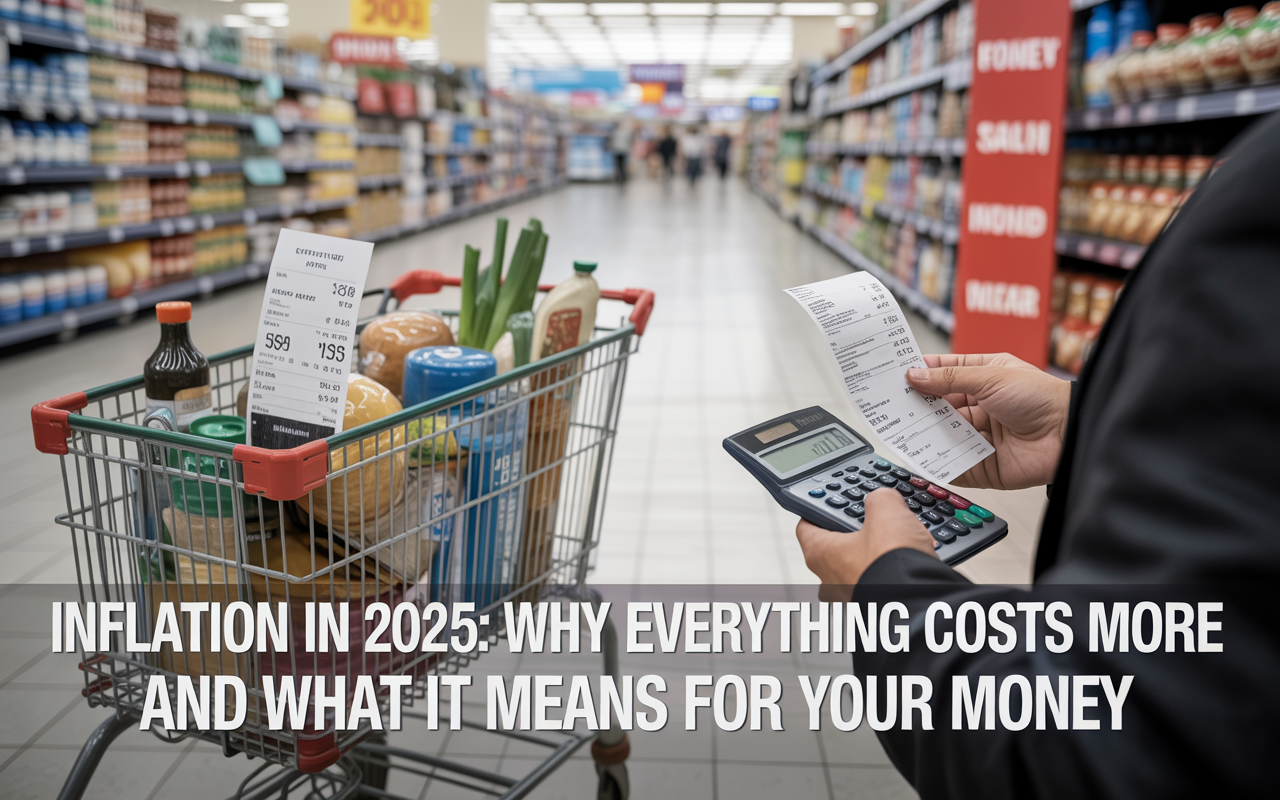
If you've noticed your grocery bill creeping higher, your rent jumping unexpectedly, or your gas tank costing more to fill, you're not imagining things. Inflation 2025 explained in official terms may suggest the economy is stabilizing, but the lived experience tells a different story. For millions of Americans, the real inflation rate — what they actually pay for essentials — feels significantly higher than government statistics indicate.
This disconnect between reported data and daily reality isn't new, but it has become more pronounced in recent years. Understanding why requires looking beyond the headlines at how inflation is measured, why certain costs remain stubbornly elevated, and what this means for your financial future.
This article breaks down:
- What inflation actually is and how it's measured
- Why 2025 inflation feels worse than government data suggests
- How inflation impacts retirement, savings, and purchasing power
- Why tangible assets historically perform well during inflationary periods
Why Official Inflation Feels Wrong
The Consumer Price Index (CPI) — the most commonly cited inflation measure — is designed to track price changes across a "basket" of goods and services. In theory, this provides an accurate picture of how much more Americans pay over time. In practice, the methodology creates significant blind spots.
Several factors contribute to the gap between dollar purchasing power decline as reported and as experienced:
- Category weighting: The CPI basket may not reflect how average families actually spend money. Food and energy, which hit budgets hardest, have historically been weighted less than their impact suggests.
- Shrinkflation: Products shrink while prices stay the same. Your cereal box holds fewer ounces, your paper towels have fewer sheets, but the price tag hasn't changed. This hidden inflation rarely shows up in official numbers.
- Quality adjustments: If a product "improves," statisticians may adjust the price downward in their calculations — even if you're paying more dollars at the register.
- Housing calculations: Rather than measuring actual rents and home prices, CPI uses "owners' equivalent rent" — a theoretical measure that often lags real housing costs by months or years.
The result is a persistent gap between the inflation rate the government reports and the inflation rate families feel in their checkbooks.
The Lived Inflation Rate vs the Reported Rate
Consider how a typical family budget breaks down. Housing, food, transportation, healthcare, and energy often consume 70-80% of household income. When these categories experience above-average price increases — as they have consistently — families feel the squeeze regardless of what aggregate statistics say.
Medical care costs continue rising faster than general inflation. Childcare has become prohibitively expensive in many regions. Auto insurance premiums have surged. These are the costs that define daily life, and they paint a picture of why prices are rising 2025 in ways that official measures struggle to capture.
When someone says inflation is "under control," they're often citing a number that doesn't reflect the reality of feeding a family, heating a home, or keeping a car on the road.
Sticky Inflation vs Transitory Narratives
Remember when officials promised inflation would be "transitory"? The theory was simple: pandemic-related supply disruptions would resolve, and prices would naturally moderate. For some categories, this happened. For many others, it didn't.
The reality of sticky inflation has become clear: once prices rise, they rarely return to pre-inflation levels. Wages may eventually catch up, but the purchasing power lost during the transition is gone permanently. A dollar in 2020 simply bought more than a dollar buys today, and that gap is unlikely to close.
Several forces have kept inflation elevated:
- Wage-price dynamics: As workers demand higher pay to keep up with costs, businesses raise prices to cover increased labor expenses, creating a self-reinforcing cycle.
- Supply chain restructuring: The shift away from just-in-time inventory and overseas production has increased costs throughout the economy.
- Geopolitical pressures: Trade tensions, conflicts, and sanctions have disrupted commodity markets and increased input costs.
- Energy volatility: Oil and natural gas prices remain unpredictable, affecting everything from transportation to manufacturing.
Why Modern Inflation Behaves Differently
Post-pandemic economic structures have changed in ways that make inflation more persistent. The globalization that kept prices low for decades is partially reversing. Reshoring manufacturing brings jobs home but increases production costs. Climate-related disruptions affect agriculture and commodities. Demographic shifts reduce labor supply in key sectors.
Higher interest rates — the traditional tool for fighting inflation — have their own consequences. Borrowing costs for mortgages, auto loans, and credit cards have surged. Businesses face higher financing costs that get passed to consumers. The cure for inflation, in this sense, creates its own form of financial pressure.
These structural changes suggest that elevated inflation may be a feature of the economic landscape for years to come, not a temporary aberration.
The Chain Reaction in Asset Prices
Inflation doesn't just affect what you buy at the store — it reshapes the value of everything you own and everything you're saving for. Understanding these dynamics is essential for long-term financial planning.
Real estate has seen dramatic price increases, partially driven by inflation in construction materials, labor, and land costs. While home values rising might seem beneficial for owners, it creates challenges for first-time buyers and increases property taxes for everyone.
Stock market valuations face pressure as higher interest rates reduce the present value of future earnings. Companies with pricing power may pass costs to consumers, but those that can't face margin compression.
Bonds and fixed-income investments have delivered significant losses as rates rose. Investors who bought long-term bonds before inflation surged have seen principal values decline substantially.
Savings accounts may offer higher yields than in recent years, but often still fail to keep pace with actual inflation — meaning money in the bank loses purchasing power over time.
How Inflation Quietly Erodes Wealth
The most insidious aspect of inflation and retirement planning is its cumulative effect. A 3% annual inflation rate may sound manageable, but over 20 years, it cuts purchasing power nearly in half. At 5%, purchasing power drops by more than 60% over two decades.
This creates a particular challenge for retirees living on fixed incomes. Social Security adjustments often lag actual cost increases. Pension payments, if they exist, may not adjust at all. The retirement savings that seemed adequate at 65 may prove insufficient by 80.
Inflation functions as a hidden tax — invisible but constant, transferring wealth from savers to borrowers, from fixed-income recipients to those with pricing power. Understanding this dynamic is the first step toward protecting against it.
Why Inflation Historically Pushes Gold and Silver Higher
Throughout history, periods of sustained inflation have consistently increased interest in tangible assets — particularly precious metals. This pattern isn't coincidental; it reflects the fundamental nature of gold and silver as stores of value.
When paper currency loses purchasing power, assets that cannot be created by government decree tend to hold their value. Gold supply increases by roughly 1-2% annually through mining — a rate no central bank can match when it comes to currency creation. This scarcity is structural and permanent.
Historical patterns worth noting:
- 1970s stagflation: Gold rose from $35 to over $800 per ounce as inflation surged and faith in the dollar declined.
- Post-2008 period: Quantitative easing and zero interest rates drove gold to then-record highs as investors sought inflation protection.
- Recent years: As inflation returned, gold reached new all-time highs, confirming its historical role as an inflation hedge.
Silver shares these characteristics while also serving industrial applications. Demand from technology, solar panels, and electronics provides additional price support beyond monetary considerations.
Tangible Assets vs Paper Money
The appeal of physical precious metals during inflationary periods comes down to several fundamental characteristics:
- No counterparty risk: A gold coin doesn't depend on any institution's solvency, any company's earnings, or any government's promises. It simply exists as what it is.
- Independence from financial systems: Metals aren't claims on something else — they're the thing itself. This matters when faith in institutions wavers.
- Universal recognition: Gold and silver have been valued across every culture and civilization for thousands of years. This acceptance is unlikely to change.
- Finite supply: Unlike currencies that can be created at will, precious metals require significant effort to extract and refine. Scarcity is guaranteed.
When trust in paper money and financial institutions declines — as it often does during inflationary periods — tangible assets offer something increasingly valuable: certainty.
Conclusion
Inflation in 2025 remains elevated in the categories that matter most to American families — housing, food, healthcare, and energy. Official metrics, while useful, often miss the lived reality of rising costs. The gap between reported inflation and experienced inflation has real consequences for budgets, savings, and long-term financial planning.
Understanding these dynamics is the first step toward navigating them effectively. Inflation quietly erodes purchasing power, reshapes asset valuations, and creates particular challenges for those on fixed incomes. The dollars saved today will buy less tomorrow — a simple reality that every financial plan must account for.
Historically, periods of sustained inflation have shifted attention toward real, tangible stores of value. Gold and silver have served this role for millennia, offering an alternative to paper assets whose value depends on institutional promises and government policies.
The goal isn't to predict exactly what will happen — no one can do that reliably. The goal is to understand the forces at play, recognize how they might affect your financial situation, and make informed decisions accordingly. In an environment where everything costs more and the future remains uncertain, knowledge is the most valuable asset of all.
By understanding inflation's real impact, Americans can better prepare for whatever economic conditions lie ahead — not through fear, but through informed awareness and thoughtful planning.
Found this article helpful?
Take Our 1-Minute Gold IRA Match Quiz
Get a personalized recommendation based on your goals and investment style.
Frequently Asked Questions
Explore Related Topics
For Investors Who Don't Have Time to Chase Headlines
Industry news distilled into a scannable email.
Vincent Edwards
Vincent Edwards is the founder and lead analyst at Precious Metals Report, covering gold and silver markets, retirement account strategies, and macroeconomic trends.
Read more from this author